🌿 TitanFlow Prostate & Urinary Flow Support
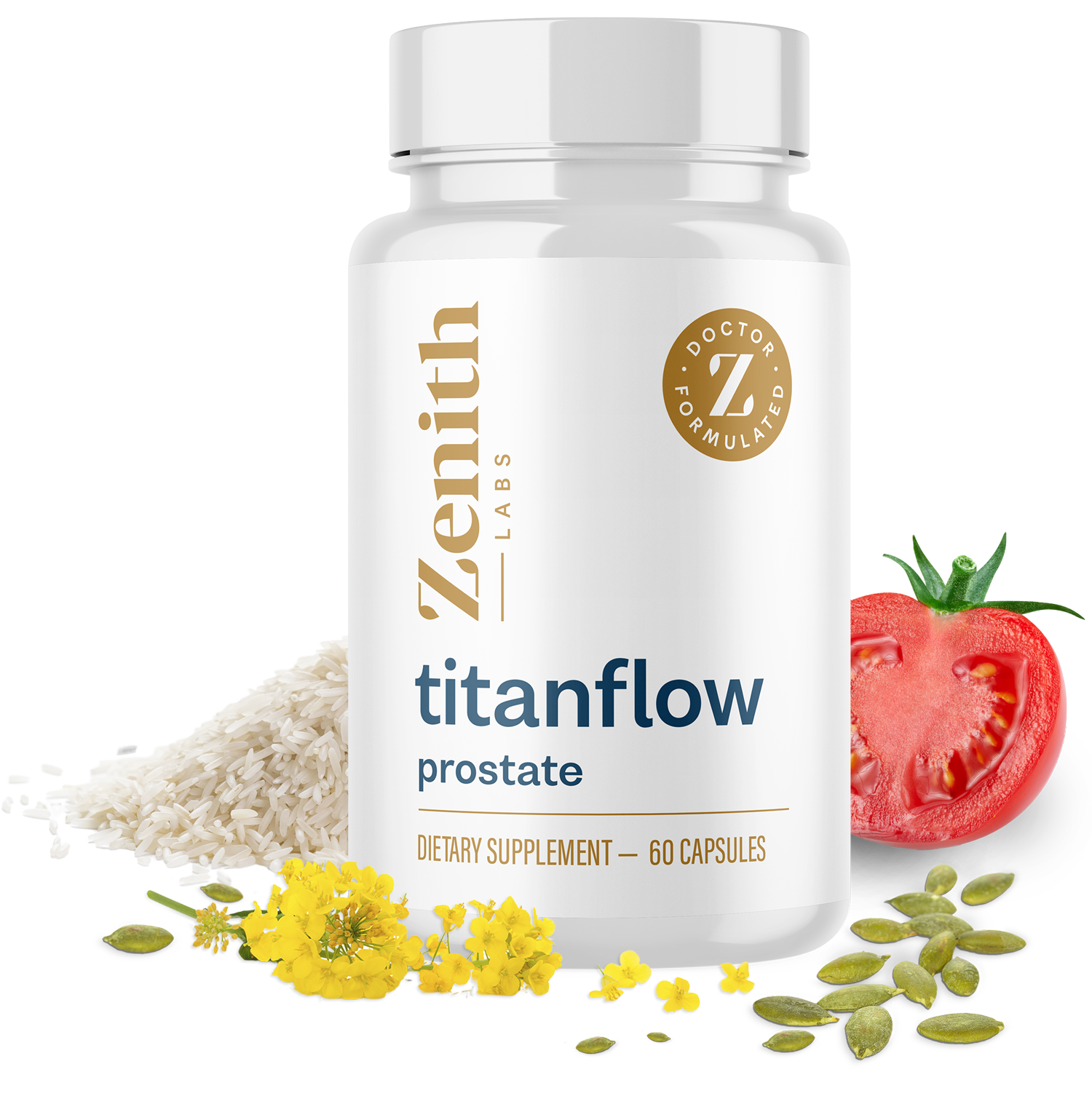
Changes in urinary habits can affect sleep, comfort, and daily routines. TitanFlow is marketed as a dietary supplement intended to support prostate wellness and healthy urinary flow as part of a balanced lifestyle.
Product materials describe a blend of plant-derived ingredients including pumpkin seed oil, beta-sitosterol, pygeum, lycopene, and broccoli sprout extract. These ingredients have been studied individually for different aspects of men's health, but that does not prove the finished TitanFlow formula delivers a particular result.
TitanFlow is intended to complement—not replace—medical advice, healthy habits, or prescribed care. Results vary, and the product should not be treated as a solution for an underlying medical condition.
TitanFlow is marketed to support:
• prostate and urinary wellness
• everyday urinary comfort and healthy flow
• a consistent personal wellness routine
🔥 Review the product label and consult a healthcare professional before deciding whether TitanFlow fits your routine.

Why Choose TitanFlow Supplement?
Pharmaceutical grade quality is ensured by Good Manufacturing Practice certification.
TitanFlow candy are completely natural, non-GMO, and gluten-free.
TitanFlow probiotics USA dietary supplement is made in the United States of America.
TitanFlow is manufactured according to the latest standards.
TitanFlow is a dietary supplement marketed for prostate health and urinary-flow support. Prostate and urinary symptoms can have several causes, including benign prostatic hyperplasia (BPH), infection, or other conditions that require medical evaluation. TitanFlow is promoted as a supplement, not a medicine or a diagnostic tool.
Available product materials list botanical ingredients such as pumpkin seed oil, beta-sitosterol, pygeum africanum, lycopene, and broccoli sprout extract. These ingredients are sometimes discussed in nutrition research related to men's urinary wellness, but evidence for an individual ingredient is not the same as clinical proof that the finished TitanFlow formula works as advertised.
Label information from a supplement database lists five active ingredients and provides their amounts per serving. Other websites sometimes mention additional ingredients or make broader claims, so the Supplement Facts panel on the bottle you receive should be treated as the primary reference.
TitanFlow is not intended to diagnose, treat, cure, or prevent an enlarged prostate, prostate cancer, urinary tract disease, or any other medical condition. Seek medical advice for persistent urinary changes, pain, blood in urine, or difficulty urinating.
TitanFlow is marketed around prostate wellness and everyday urinary comfort. The product combines plant-derived ingredients that have been used in supplements or studied individually for men's health, including pumpkin seed oil, beta-sitosterol, pygeum africanum, lycopene, and broccoli sprout extract.
The label information available through the NIH Dietary Supplement Label Database lists five active ingredients per two-capsule serving: pumpkin seed oil, pygeum africanum bark extract, broccoli sprout extract, lycopene, and a beta-sitosterol complex. Those amounts describe the label; they do not prove that the finished product produces a particular health outcome.
Beta-sitosterol has been examined in clinical studies for urinary symptoms, while evidence for other botanicals varies by preparation and study. NIH's NCCIH notes that findings for supplements used for BPH are mixed, and evidence about one ingredient cannot be applied automatically to every combination product.
The available label also lists inactive components such as rice flour, silicon dioxide, magnesium stearate, and gelatin. Check your own package for the current ingredient list, serving instructions, and allergen information.
Use TitanFlow only as directed on its label, and ask a healthcare professional about potential interactions, especially if you take prescription medicines or have urinary symptoms. Supplements should not delay diagnosis or treatment.
Illustrative review example — not an actual customer testimonial: “I have been researching options for everyday urinary wellness and wanted to understand what was in the formula. The ingredient list gave me a starting point for questions to ask my healthcare professional. I know persistent urinary changes deserve proper evaluation, and I would not expect a supplement to replace that.”
Illustrative review example — not an actual customer testimonial: “Clear supplement information matters to me. Before trying TitanFlow, I would compare the website claims with the label on the bottle and check whether any ingredients could interact with my medication. I prefer realistic expectations and a steady routine over dramatic promises.”
Illustrative review example — not an actual customer testimonial: “I am working on sleep, hydration, and healthy daily habits as I learn more about prostate wellness. TitanFlow is marketed for urinary-flow support, but results are not guaranteed and symptoms can have different causes. I would speak with a clinician if symptoms persisted or changed.”
1. Pumpkin seed oil — 500 mg: A plant oil containing fatty acids and phytosterols, included in the label for men's urinary and prostate support.
2. Pygeum africanum bark extract 4:1 — 100 mg: An extract from African plum tree bark traditionally used in herbal products for urinary wellness.
3. Broccoli sprout extract 4:1 — 50 mg: A plant extract containing compounds such as glucosinolates.
4. Lycopene 5% — 37.5 mg: A tomato-derived carotenoid with antioxidant properties.
5. Beta-sitosterol complex — 30 mg: A plant sterol studied for possible effects on urinary symptom scores and flow measures.
6. Rice flour: An inactive ingredient used as a carrier or filler.
7. Silicon dioxide: An inactive ingredient commonly used to help keep powder free-flowing.
8. Magnesium stearate: An inactive processing aid used in capsule manufacturing.
9. Gelatin: A capsule-shell material.
Source note: the NIH Dietary Supplement Label Database lists five active ingredients and these four inactive components for one TitanFlow by Zenith Labs label. Product versions may differ; check the Supplement Facts and other ingredients panel on the bottle you receive. Amounts above are per two-capsule serving according to that label.
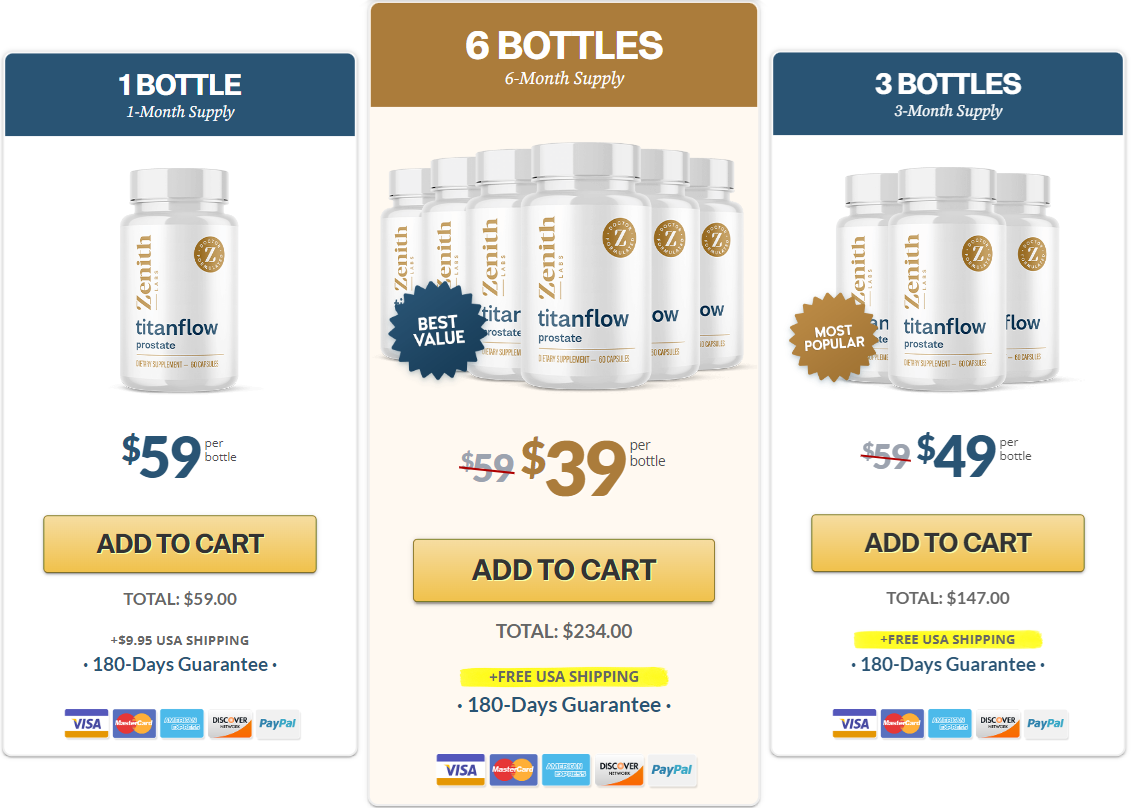
TitanFlow will be available for you to test out for two months. You can apply for our FULL refund if you are among the 0.5% who are not satisfied.
Consider this a trial run in case things don't go your way. TitanFlow may work. If it doesn't, you can ask for your money back.
1. Prostate wellness support: Marketed to complement everyday prostate-health habits.
2. Urinary-flow support: Designed for men interested in maintaining healthy urinary function.
3. Plant-based ingredient blend: Includes pumpkin seed oil, pygeum, broccoli sprout extract, lycopene, and beta-sitosterol.
4. Antioxidant-related nutrition: Lycopene is a carotenoid with antioxidant properties.
5. Convenient daily format: A capsule supplement intended for use according to its label.
6. Wellness routine support: Can be considered alongside healthy habits and professional guidance.
These are product-positioning descriptions, not proven treatment effects. TitanFlow is not intended to diagnose, treat, cure, or prevent disease. Results are not guaranteed, and urinary symptoms should be assessed by a healthcare professional.
TitanFlow is marketed as a dietary supplement for prostate and urinary-flow support. It is not a medicine and does not replace medical evaluation.
One label in the NIH Dietary Supplement Label Database lists pumpkin seed oil, pygeum africanum bark extract, broccoli sprout extract, lycopene, and beta-sitosterol complex, plus inactive ingredients. Product versions may differ, so check your own package.
Follow the directions on the package you receive and do not exceed the stated serving. Ask a healthcare professional about possible interactions if you take medication or have a medical condition.
No. TitanFlow is not intended to diagnose, treat, cure, or prevent disease, and results are not guaranteed. Persistent urinary symptoms, blood in urine, pain, or difficulty urinating need professional assessment.